


Feb
From Martyrdom to Modern Policing: Valentine’s Day Through a Law Enforcement Lens
Valentine’s Day didn’t begin with roses, chocolates, or heart‑shaped everything. Its roots run through the courts of emperors, the streets of medieval Europe, and the crime‑ridden alleys of Prohibition‑era Chicago. And woven through that history is a story of law enforcement evolving alongside society itself.
This is Valentine’s Day—not as a romantic holiday, but as a case study in how policing has changed over 1,700 years.

1. Saint Valentine: A Criminal in the Eyes of Rome
Long before he became the patron saint of love, Valentine was arrested, interrogated, and executed by the Roman state. His “crime” was performing marriages for Christian couples and refusing to renounce his faith.
To the empire, he wasn’t a hero—he was a lawbreaker.
But this moment reveals something important:
laws reflect the values of the society that creates them, and enforcement follows suit.
Rome used policing to maintain religious conformity. Today, policing is grounded in protecting rights, not suppressing them.
Valentine’s story marks the earliest chapter in a long narrative about how justice systems evolve as cultures change.
2. Medieval Europe: Love, Law, and Social Order
As Valentine’s Day shifted toward romance in the Middle Ages, it collided with a world where marriage, property, and social status were tightly regulated by law.
Unauthorized marriages, elopements, and inheritance disputes often landed people before local magistrates. Early policing—more community‑based than centralized—was responsible for keeping order in a society where love could disrupt the social hierarchy.
It’s a reminder that law enforcement has always been intertwined with the everyday lives of ordinary people, even in matters of the heart.

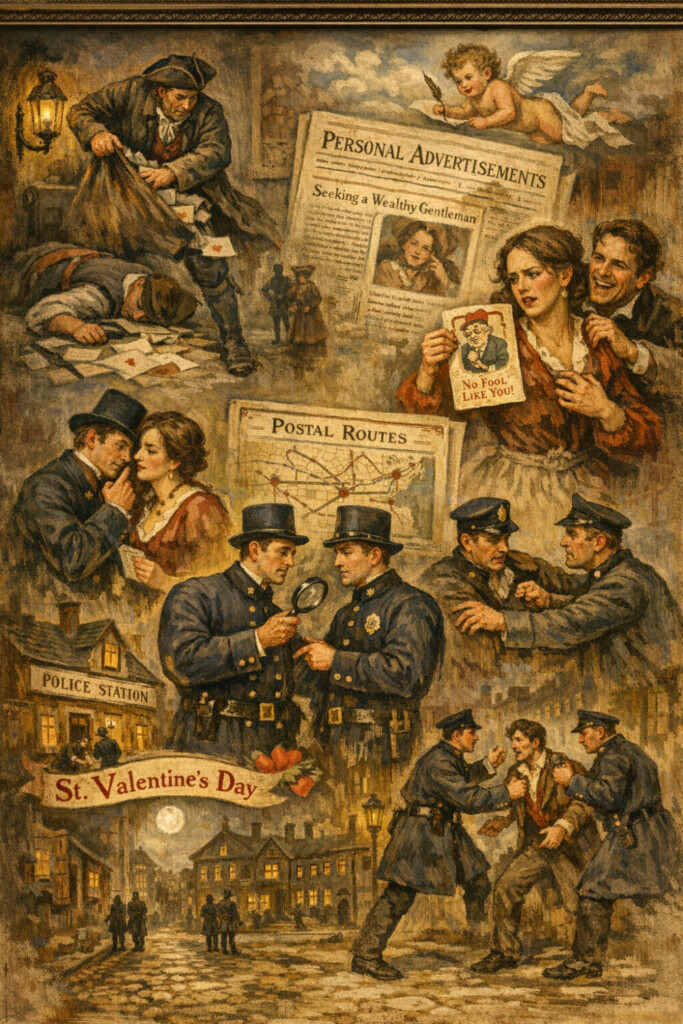
3. The 18th–19th Century: Fraud, Scams, and the Birth of Modern Policing
When Valentine’s cards became mass‑produced, so did the opportunities for crime.
Mail theft spiked.
Harassing “vinegar valentines” led to disorder complaints.
Romance scams emerged through newspaper personal ads.
This era marks the rise of professionalized policing, with officers increasingly trained to investigate fraud, protect postal routes, and respond to interpersonal disputes. Valentine’s Day became one of the first holidays where police noticed seasonal crime patterns—a concept still used in modern analytics.
The holiday was no longer just about love. It was about public safety in a rapidly changing world.
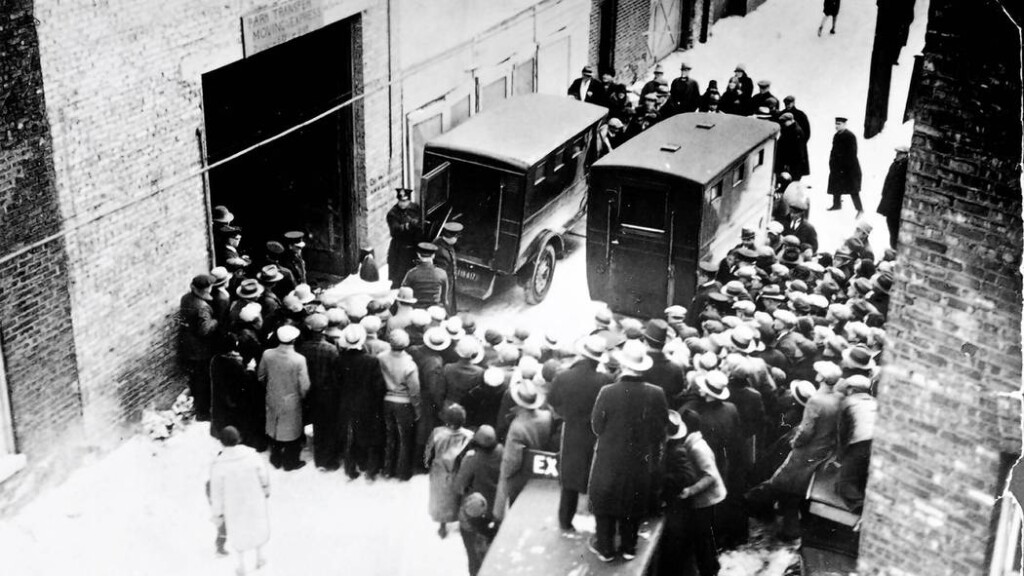
4. The St. Valentine’s Day Massacre: A Turning Point in Policing
Nothing shaped the public’s understanding of Valentine’s Day and crime more than the 1929 St. Valentine’s Day Massacre.
Seven men were killed in a gang conflict that shocked the continent. But the event did more than dominate headlines—it pushed policing into a new era.
Investigators used:
- early ballistics comparison,
- improved crime‑scene photography,
- and more coordinated inter‑agency communication.
It became a catalyst for modern forensic science and professional standards.
A tragedy, yes—but also a moment that accelerated the evolution of policing into a more scientific, evidence‑driven profession

5. Today: Valentine’s Day as a Public Safety Event
Modern policing looks nothing like its ancient or Prohibition‑era predecessors. Today, Valentine’s Day is a reminder of how far law enforcement has come—and how much broader its responsibilities are.
Romance Scams
Police now issue annual warnings about online fraud, identity theft, and financial exploitation.
Investigators use digital forensics, cybercrime units, and international cooperation—tools unimaginable in earlier eras.
Domestic‑Related Calls
Officers today are trained in:
- trauma‑informed response,
- de‑escalation,
- victim support,
- and community referral pathways.
This reflects a shift from reactive policing to holistic public safety.
Retail and Gift‑Related Crime
Package theft, credit card fraud, and counterfeit goods are now part of the Valentine’s landscape.
Modern policing uses analytics, surveillance technology, and community partnerships to prevent and investigate these crimes.
Valentine’s Day has become a snapshot of how policing has expanded to meet the needs of a digital, interconnected society.
6. A Holiday That Shows How Far We’ve Come
From a Roman execution to a Prohibition‑era gang war to today’s cybercrime investigations, Valentine’s Day offers a surprisingly rich window into the evolution of law enforcement.
It shows:
- how societies redefine crime,
- how policing adapts to new threats,
- and how officers continue to protect communities in ways that would have been unrecognizable centuries ago.
Valentine’s Day isn’t just a celebration of love—it’s a reminder of the enduring role of law enforcement in safeguarding the wellbeing of the public, generation after generation.

No Comments